Urinary Problems in Male and Female Patients What Are Urinary Problems? Urinary problems refer to …
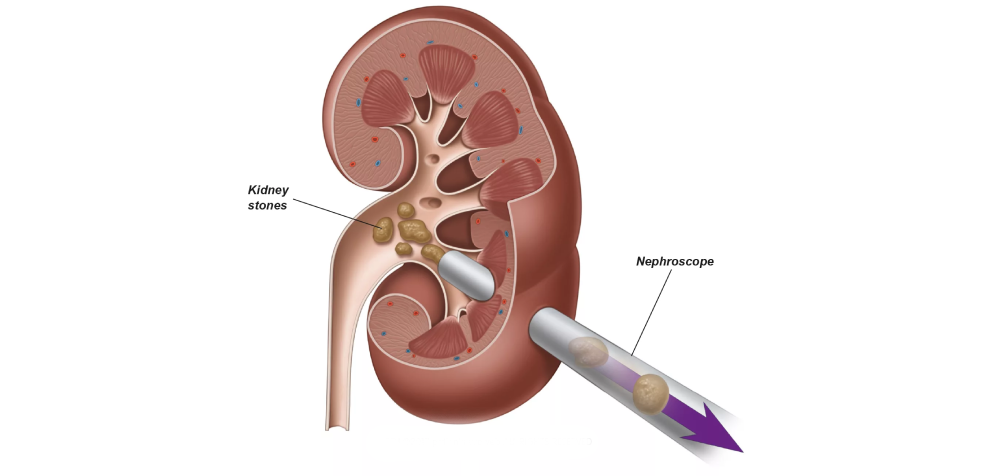
RIRS (Retrograde Intrarenal Surgery) with laser lithotripsy is one of the most advanced and minimally invasive procedures for removing kidney stones. It involves passing a flexible scope through natural urinary passages—without any cuts—to locate and break kidney stones using a high-power laser.
Under the expertise of Dr. Ajinkya Kasekar, RIRS ensures precise stone clearance, minimal pain, and a quick recovery, making it a preferred treatment for stones that are difficult to remove by other methods.
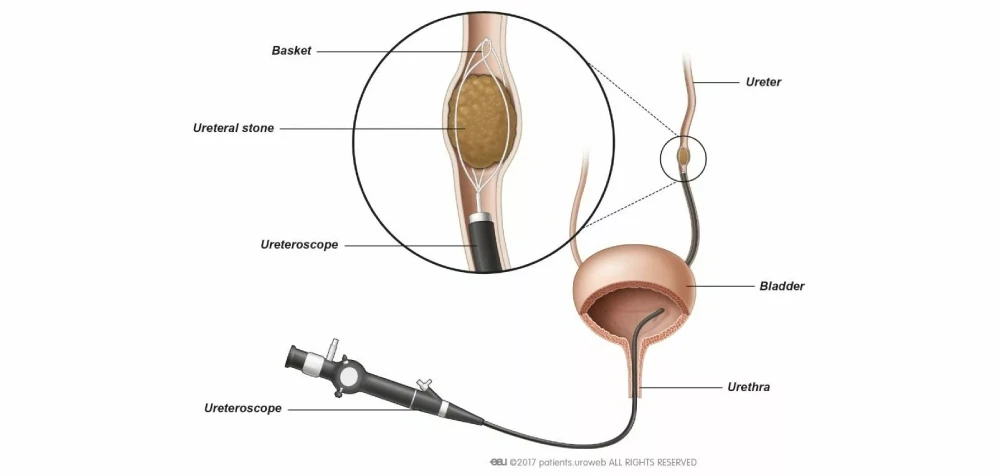
RIRS is an endoscopic procedure performed through the urethra → bladder → ureter → kidney, using a thin, flexible ureteroscope.
A Holmium:YAG laser or Thulium fiber laser is then used to break the stone into fine dust (dusting technique) or small fragments.
No external incision is required.
RIRS is recommended for:
Kidney stones up to 2 cm
Stones not responding to medications
Stones stuck inside the kidney calyces
Failed ESWL (Shock Wave Lithotripsy)
Stones in patients with bleeding disorders
Obese patients or those unfit for open/laparoscopic surgery
Children with kidney stones (very safe)
It is also ideal for stones that require precision and minimal trauma.
A flexible ureteroscope is passed through the urinary passage.
The kidney stone is visualized with a high-definition camera.
A laser is used to break the stone into dust or tiny fragments.
The dust usually clears naturally through urine.
A DJ stent is placed temporarily to ensure smooth drainage and healing.
The procedure usually takes 45–90 minutes depending on the stone’s size and location.
No cuts, no stitches
Minimal pain and quick recovery
Highly precise laser stone fragmentation
Day-care or short-stay procedure
Safe for high-risk and elderly patients
Removes stones that are otherwise difficult to treat
Low complication rate
Most patients:
Go home within 24 hours
Resume normal activities in 2–3 days
Experience minimal discomfort
Pass small fragments/dust naturally
A follow-up is required for DJ stent removal after 2–6 weeks.
Expertise in advanced laser stone surgery
Uses the latest flexible ureteroscopes and laser systems
High stone-clearance rates
Minimally invasive, patient-centered approach
Focus on safety, comfort, and faster healing
Strong experience in managing complex stone cases
If you are dealing with kidney stones, RIRS with laser removal offers a safe, painless, and highly effective solution. Consult Dr. Ajinkya Kasekar for expert evaluation and advanced stone treatment.
Urinary Problems in Male and Female Patients What Are Urinary Problems? Urinary problems refer to …
PCNL (Percutaneous Nephrolithotomy) PCNL (Percutaneous Nephrolithotomy) is an advanced, minimally invasive surgical procedure used to …
URS with laser removal URS (Ureteroscopy) with laser lithotripsy is a highly effective, minimally invasive …
Endoscopy with Laser Removal Endoscopic laser removal is a modern, minimally invasive procedure used to …

Dr. Ajinkya Kasekar is a trusted urologist in Mumbai, offering comprehensive care for kidney stones, prostate disorders, urinary infections, incontinence, and reconstructive urology using modern, minimally invasive techniques.