
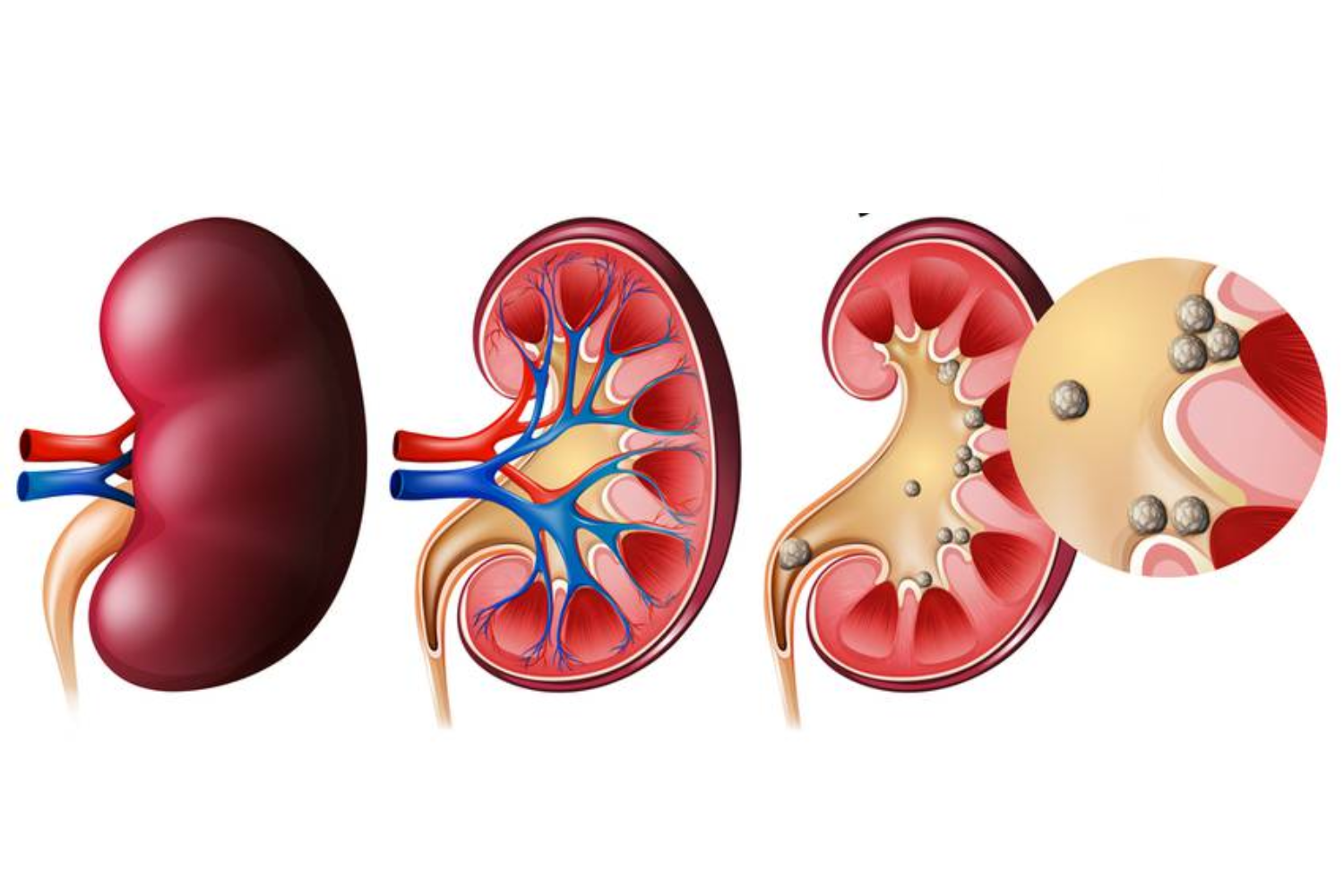
Introduction
Kidney and ureteric stones are treated using different techniques depending on their size, location, and hardness. The three most common and effective procedures today are RIRS, URS, and PCNL.
This blog by Dr. Ajinkya Kasekar explains the differences so patients can understand which option may be right for them.
1. URS (Ureteroscopy With Laser)
What It Is
A thin endoscope is passed through the urethra → bladder → ureter to reach the stone.
A laser breaks the stone into small pieces.
Best For:
- Ureteric stones
- Stones <1.5 cm
- Stuck stones causing severe pain
- When medicines fail to pass the stone
Advantages
- No cuts, no stitches
- Fast recovery
- Very high success rate
2. RIRS (Retrograde Intrarenal Surgery)
What It Is
A flexible ureteroscope is used to reach the innermost parts of the kidney.
A laser converts the stone into fine dust.
Best For:
- Kidney stones up to 2 cm
- Stones deep inside kidney calyces
- When ESWL fails
- High-risk or obese patients
Advantages
- Most advanced laser treatment
- No cuts
- Dusting technique ensures smooth clearance
- Quick recovery
3. PCNL (Percutaneous Nephrolithotomy)
What It Is
A small keyhole incision is made in the back to directly access the kidney.
The stone is removed using ultrasonic/laser energy.
Best For:
- Large stones >2–2.5 cm
- Staghorn stones
- Hard or multiple stones
- Stones causing kidney damage
Advantages
- Best success rate for large stones
- Direct approach
- One-stage solution
How to Choose the Right Treatment
| Stone Size | Best Treatment |
|---|---|
| <6 mm | Medicines |
| 6 mm – 1.5 cm | URS |
| Up to 2 cm | RIRS |
| >2–2.5 cm or large | PCNL |
| Staghorn stones | PCNL |
Other factors: age, medical history, stone hardness, infection, kidney anatomy.
Conclusion
Each procedure has its role, and the right treatment can only be decided after proper evaluation.
For accurate diagnosis and the most suitable option, consult Dr. Ajinkya Kasekar, specialist in advanced laser and minimally invasive stone surgeries.